Still alive :D
You're on a roll and life hits the brakes. Now what? This is my story about surgery, a lost race, and what I learned when I had no choice but to stop.
If you’re reading this, you’re probably in one of two situations: either something similar happened to you and you want to know you’re not the only one, or the title just caught your eye. Either way, welcome. This is my story, and if anything I write helps you, then it was worth telling.
Nothing is written
I was at probably the best point of my life: last semester of Mechatronics at UNAM, training to break my personal record at the Kardias half marathon, leading IEEE as Student Branch Chair, taking my diploma course, starting my thesis. Everything was going according to plan.
Until it wasn’t.
On a Friday the 13th — yes, Friday the 13th, like the movie — I arrived to class on my bike and suddenly felt a pain so sharp I couldn’t even make it to the nurse’s office; I was hospitalized within hours. What followed were days of hospital beds, anesthesia, pain, paperwork with a cane in hand, and one word that echoed over and over in my mind: “rest.”
Three weeks. Sure, doesn’t sound like much, but when your life revolves around movement — running, going to class, hitting the gym, sleeping little, never staying in one place for more than 3 hours — three weeks of stillness feel like three months.
What hit the hardest
The hardest part wasn’t the physical pain. It was the helplessness.
Watching the people around me move forward while I couldn’t even walk to the store. Watching the Kardias race date (a race I love) approach knowing I wouldn’t be at the starting line. Mentally tallying everything that was piling up: assignments, projects, responsibilities.
Overnight, I went from running over 20 kilometers without breaking a sweat to celebrating that I could climb the stairs without help. It was like going back to elementary school after you’ve already been solving differential equations.
And in that void, unexpected thoughts crept in: doubts about my worth as a person, frustration with myself for not being able to “produce” anything, the feeling of being stuck while the world kept spinning, and the desperation of not being able to sit for 10 minutes to work.
If you’ve ever felt like that — like your worth depends on what you produce — I want you to know you’re not alone. And that it’s not true.
Learning to walk again
But something shifted when I started walking.
Not running. Walking. Slowly, carefully, without rushing. First it was 2,000 steps. Then 5,000. Then 8,000. The day I hit 10,000, I felt like I’d won a marathon (though I probably should’ve walked less that day lol).
Every extra thousand steps was a small victory. And those small victories gave me back something I didn’t know I’d lost: perspective.
I realized I’d been running on autopilot for months. Running out of inertia, studying out of inertia, moving forward just for the sake of it with no clear direction; I did things because doing was the only thing I knew how to do. The surgery forced me to stop, and when I stopped, I got to know parts of myself I’d been ignoring by never slowing down.
What I wasn’t appreciating
Walking in the park. That simple.
Watching the morning sun through the window. Talking without rushing to the people I love. Studying something new and feeling genuine curiosity. Building projects that make people’s lives better. Playing with my dogs. Hugging my girlfriend. Laughing with my friends about stupid stuff.
All of it was there before the surgery. But I was too busy “being productive” to truly appreciate it.
The people who showed up
If this experience brought anything good, it was confirming who’s really there.
My family was there from the first moment. My parents, my cousins, my uncles, my girlfriend, my grandfather (who also happens to be a doctor and saved me from more than one scare during recovery). They all endured my worst days without letting go, even when I pushed them away and treated them horribly.
And my friends. The real ones. The ones who texted even though it took me 10 hours to reply. The ones who visited. The ones who said hi out of nowhere when they bumped into me. The ones who sent me assignments and explained what I missed in class. The ones who didn’t reach out because they needed something, but because they cared.
Also my professors and classmates at the Faculty of Engineering. I was fortunate to share time with people who aren’t just technically excellent, but genuinely great human beings. They never left me alone, and I’m grateful to have crossed paths with them.
To all of them: thank you. Truly.
If you’re going through something similar
If you’re a student, an athlete, or someone who lives life at full speed and suddenly gets forced to stop, here’s what I learned:
Your health comes first. Sounds obvious, but it isn’t when you’re used to pushing through. Don’t do things you shouldn’t before it’s time. Your body will collect the debt — fast and expensive.
Don’t compare yourself. Social media and hustle culture make us believe that if we’re not advancing, we’re falling behind. It’s not true. Sometimes stopping is moving forward. We’re made of flesh and bone, not code and Excel spreadsheets.
Give your best, but don’t self-sabotage. Stay active within your limits. Do the assignments, check in with your manager, participate remotely. But don’t destroy yourself trying to prove you “can handle everything.”
Be patient. It’s the hardest part, but also the most important. Healing takes time, and that time isn’t wasted — it’s an investment to get back to normal.
Talk to someone. Don’t carry it alone. If you feel frustrated, anxious, or if you feel like your worth depends on what you produce, talk to someone you trust or seek professional help. It’s not weakness — it’s a necessity.
The 35,000 steps: decision > inertia
Fun fact: while I was in the hospital, before they even gave me a diagnosis, I was refreshing the registration page for the Mexico City Half Marathon and the Mexico City Marathon over and over. I didn’t know what was coming, but I knew I had to do what I could with what I had (and I’m kind of stubborn).
I lost Kardias and it hurts. It was my chance to break another record, to feel free, to take one more step toward my dream of running a marathon in under three hours.
But what I didn’t lose was the plan. Or the drive. Or my goals.
When I run again — and I will, just give me a minute — it won’t be out of inertia. It will be a conscious decision. A decision that will make every single one of the 35,000 steps of a marathon not about inertia, but about choice.
We don’t have control over everything that happens in life. But we do have control over how we face it. As Pinocchio would say: “Doing your best is the best you can do.”
These weeks might be tough, but I’m still alive. :D
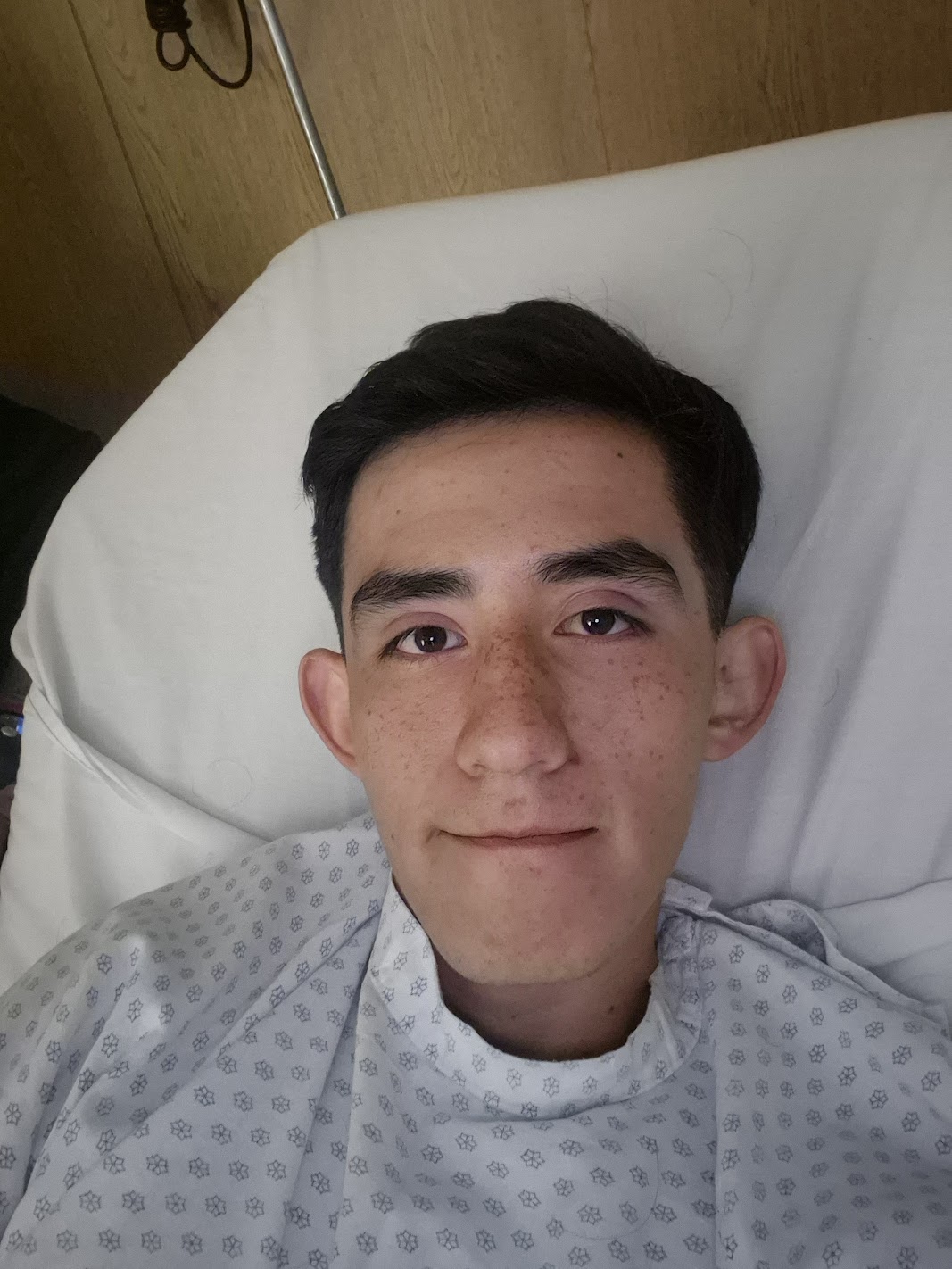
If you’re going through something similar and need to talk, don’t hesitate to reach out to a friend, or to me lmao. Sometimes we just need to know we’re not alone.
Comments
Loading comments...
Sign in to comment